After a rather tepid 1950s, where only Ealing comedies really stood out as notable films, British cinema came to the fore with a rejuvenated bang around that landmark year of 1960. With roots in documentary-filmmaking and the theatre, and with a desire to show on film a side of England which had never before been screened, the group of films known as the 'British New Wave' shook up the British film establishment in the early 1960s. Directors like Karel Reisz, Tony Richardson or Lindsay Anderson, backed up by talented authors and playwrights like Shelagh Delaney, Alan Sillitoe and John Osborne, were ambitious, determined and committed to delivering their vision of British cinema. This month on EFAS we take a look back at that vision, to a glimpse of a British cinema and a Britain that left its mark forever despite never being successfully recaptured.
Film #4: Saturday March 25th

Film #3: Saturday March 18th

Tom Courtenay gives a flawlessly nuanced performance as Billy Fisher, the underachieving undertaker’s assistant whose constant daydreams and truth-deficient stories earn him the nickname “Billy Liar.” Julie Christie is the handbag-swinging charmer whose free spirit just might inspire Billy to finally move out of his parents’ house. Deftly veering from gritty realism to flamboyant fantasy, Billy Liar is a dazzling and uproarious classic.
Film #2: Saturday March 11th

https://efas.livedrive.com/item/cf83007a37 (Link to film - 1.48 GB)
The revolutionary British New Wave films of the early 1960s were celebrated for their uncompromising depictions of working-class lives and relations between the sexes. Directed by Tony Richardson, a leading light of that movement, and based on one of the most controversial plays of its time (by Shelagh Delaney), A Taste of Honey features Rita Tushingham in her star-making debut role as a disaffected teenager finding her way amid the economic desperation of industrial Manchester. With its unapologetic identification with social outcasts and its sensitive, modern approach to matters of sexuality and race, Richardson’s classic is a still startling benchmark work of realism.
Film #1: Saturday March 4th

We begin with Albert Finney's powerhouse performance, as a Northern-English working class young man and lad-about-town, in Karel Reisz's adaptation of Alan Sillitoe's book. Finney and Richard Burton, as Jimmy Porter in Look Back in Anger were the first actors to define the archetypal male character of the British New Wave. At the time, its impact with critics and audiences lay in its depiction of a working class world that was previously unseen on British screens. What's more, this world was presented in matter-of-fact terms, rather than being seen as a social 'problem' to be solved. People drink, fight, commit adultery, get pregnant, get married - that's the way it is. Today it is one of the 'new wave' films which has most preserved its reputation with modern critics. Added to critical support at the time and its massive - and unexpected - box office success, it has some claim to be the most significant of the films of this period.
Other recommended viewing (for those interested): Look Back in Anger (1959, Tony Richardson)
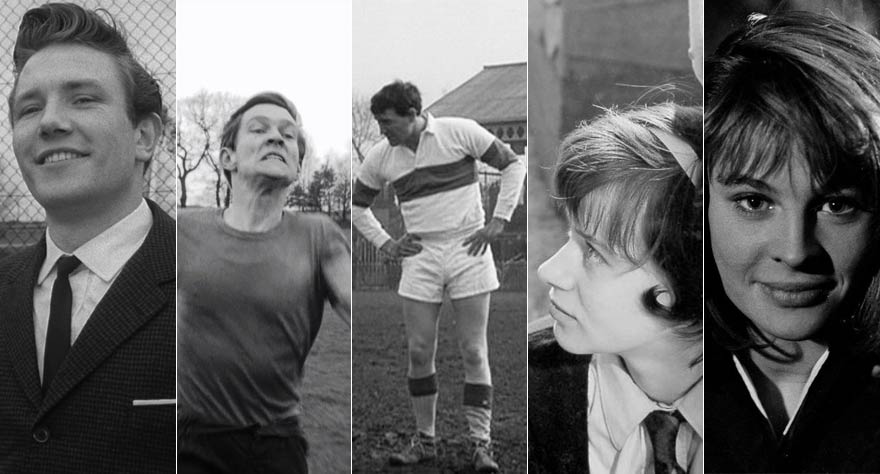
Angry young men, kitchen sinks, and the swinging sixties.
This March, EFAS shows you British cinema as it's never quite been before or since.
Four features, plus shorts, intros and more await you.

No comments:
Post a Comment